


2-in-1 Medium Steel Garden Bed - Extra Deep (Assorted Dimension Options)
2-in-1 Medium Steel Garden Bed - Extra Deep (Assorted Dimension Options)
Many items ship free. Check delivery costs at checkout before you pay, with no obligation to order. Prefer us to check? Request a shipping quote.
Couldn't load pickup availability

Why You'll Love It
A flexible growing space with extra height for everyday gardening.

Make the Most of Your Available Space
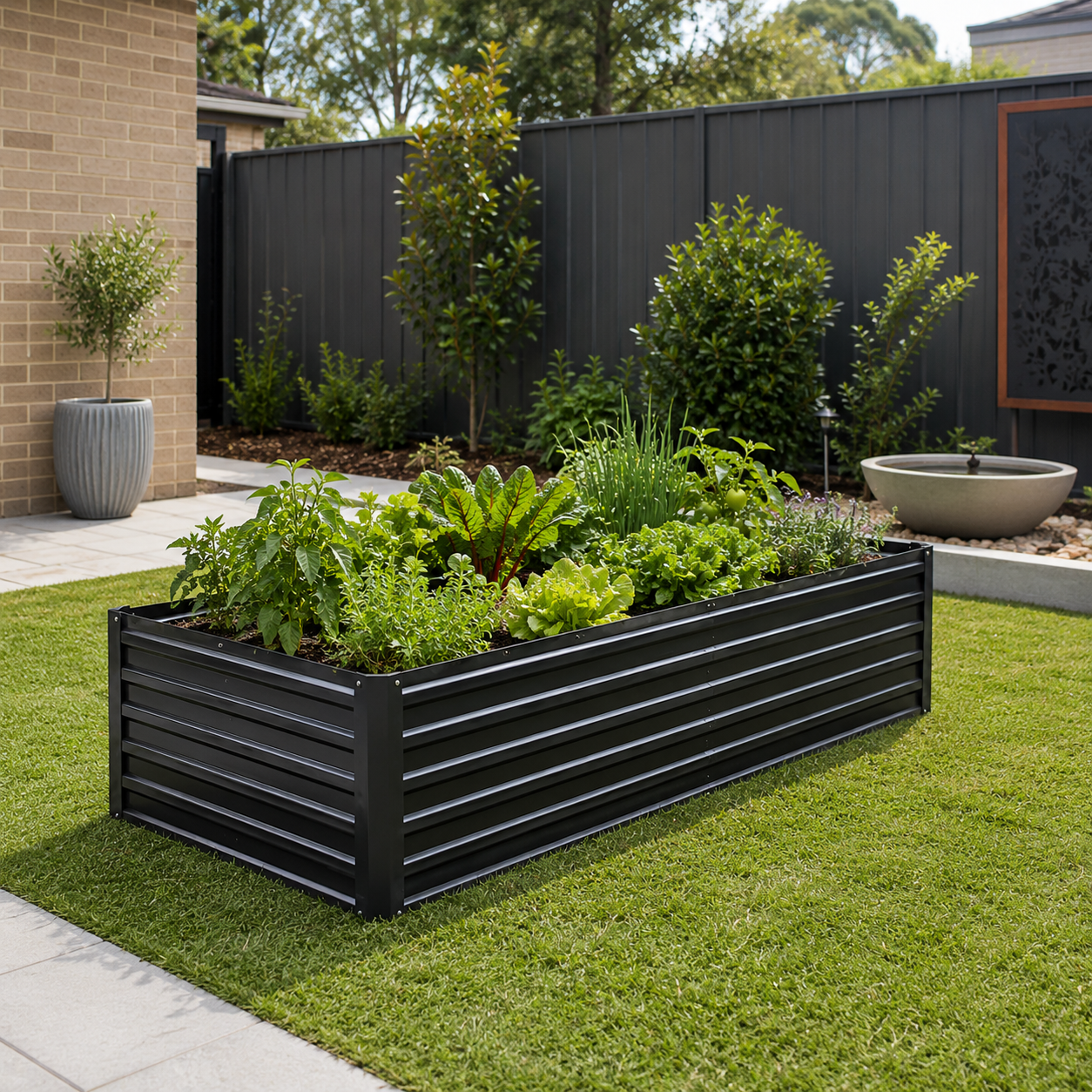
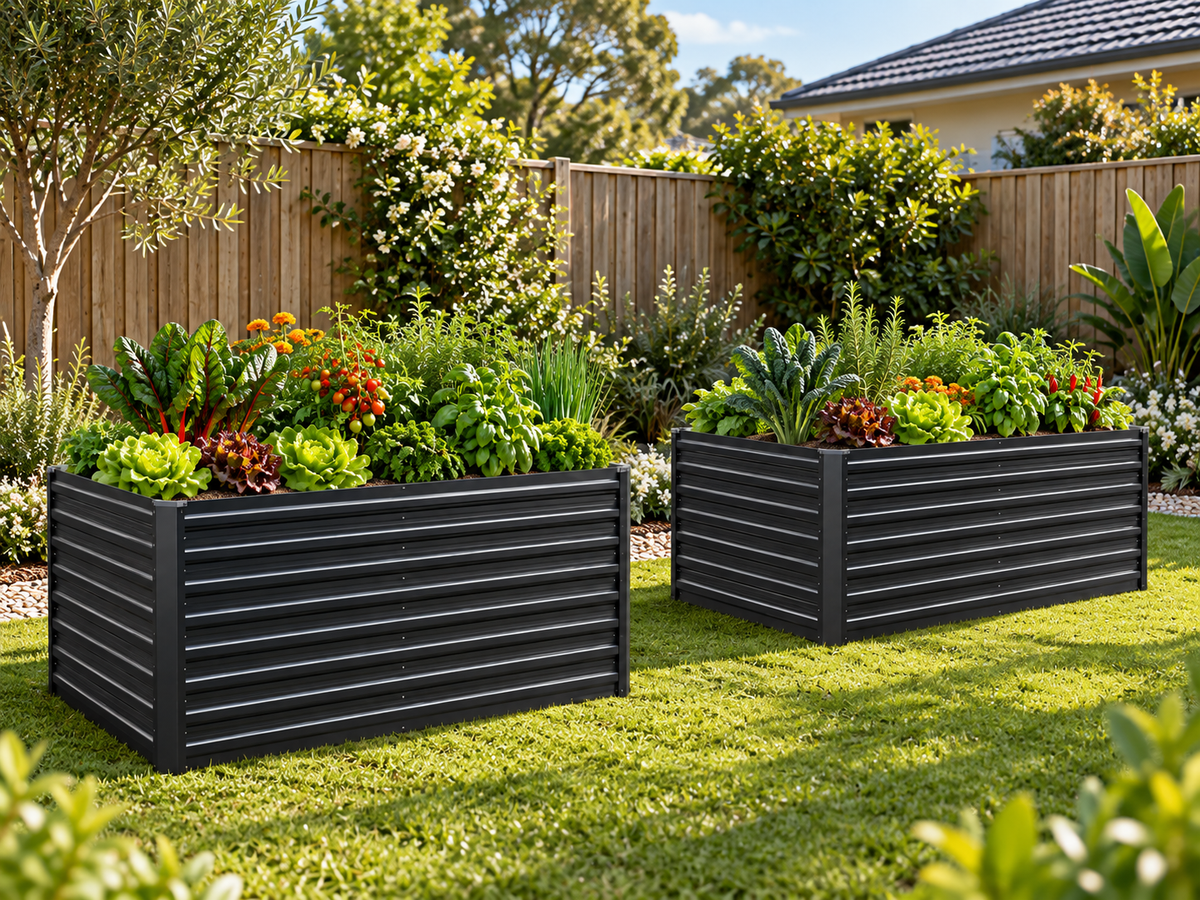
Assemble one 240 × 80 × 77cm bed for a continuous veggie patch, or two 120 × 80 × 77cm beds for separate growing areas. Choose your layout before assembly to suit your garden and leave room to walk around and tend your plants.

Bring Your Garden Closer
The raised sides reduce how far you need to bend when planting, weeding and harvesting. The depth also gives you room to plan a layered filling system, with a growing layer suited to the vegetables, herbs or flowers you choose.

Steel Panels with Internal Bracing
Made from galvanised SGCC steel, with 0.3mm panels, 0.8mm posts and a protective coated finish. Profiled panels and supplied internal support braces help maintain the bed's shape when correctly assembled and filled. Rounded safety edges provide a smoother rim for everyday use.

Room for Your Homegrown Favourites
Grow leafy greens, herbs, strawberries, flowers or seasonal vegetables. The open base allows drainage into suitable ground and lets roots reach the soil beneath. Choose your planting mix and spacing to suit your local conditions and the mature size of each plant.

Check Both Layouts Before You Plant
One long bed: 240cm L × 80cm W × 77cm H.
Two separate beds: each 120cm L × 80cm W × 77cm H.
Allow extra space around your chosen layout for access, watering and harvesting.
Tap or click the image to view the measurements at full size.
What's Included
- Modular garden bed panels and posts to assemble one long bed or two separate beds
- Internal support braces
- Assembly hardware
- Gardening gloves
- Ground pegs
Product Details
| One-bed layout | 240cm L × 80cm W × 77cm H |
|---|---|
| Two-bed layout | Each bed: 120cm L × 80cm W × 77cm H |
| Material | Galvanised SGCC steel with a protective coated finish |
| Steel thickness | Panels: 0.3mm; posts: 0.8mm |
| Colour | Aluminium grey |
| Base | Open bottom |
| Assembly required | Yes — supplied flat-packed |
| Edge design | Rounded safety edges |
| Supports | Internal support braces included |
| Warranty | 12-month manufacturer warranty |
Frequently Asked Questions
Will the garden bed feel sturdy before it's filled?
The metal panels can feel lightweight and have some flex when unpacked or assembled empty. Correct assembly, all supplied braces and fixings, level ground and even filling help the bed become more stable. Filling should not be used to compensate for loose joins or missing supports.
Do I need to fill all 77cm with premium soil?
You'll find our printable garden bed guides below this description, including advice on preparing and filling your bed. Read them before you start so you can plan your layers and the growing depth your plants need.
Can I change the layout after filling it?
Choose the layout before assembly and filling. Changing from one long bed to two separate beds, or back again, involves emptying the bed and reassembling the panels and supports. Do not try to move or reconfigure it while filled.
Can I place it on paving?
Suitable ground is the simplest option for this open-bottom bed. If using ground-level paving, ensure the surface is level, can support the filled bed and allows water to drain away. Permeable landscape fabric can help retain filling material, but it does not create drainage where none exists. Water and soil may mark the paving. The fabric can be purchased from Garden Co separately.
Ready to Grow Your Way?
Free shipping to most postcodes. Final delivery cost confirmed at checkout.
Add to cart






Supports healthier roots and natural drainage
The open-bottom design allows excess water to drain freely into the ground, helping reduce waterlogging while encouraging roots to grow deeper into the soil below. Water and nutrients move through the garden bed and circulate around the root zone, creating a well-aerated growing environment for vegetables, herbs and flowers. This natural connection with the ground can support stronger root development and healthier plant growth over time.

Helps nutrients move through the soil
As water travels through the garden bed, it carries naturally occurring nutrients through the soil and around the plant roots. The roots absorb what they need to support healthy growth, while excess water continues draining through the open base rather than collecting inside the bed. This ongoing movement of water, nutrients and organic matter helps create an active growing environment for vegetables, herbs and flowers.

SGCC Galvanised Steel and Epoxy Coating
Epoxy-coated SGCC steel combines the corrosion protection of galvanised steel with an additional protective outer coating. Beneath the epoxy finish, the zinc-coated steel helps guard against rust, while the epoxy layer provides an extra barrier against moisture, everyday wear and surface damage. The coating also creates a smooth, coloured finish that gives the product a more refined appearance. Together, the two layers provide added protection for products designed for outdoor use. (Note this image may not be an exact representation of your chosen garden bed.)