


Raised Garden Bed With Netting
Raised Garden Bed With Netting
Many items ship free. Check delivery costs at checkout before you pay, with no obligation to order. Prefer us to check? Request a shipping quote.
Couldn't load pickup availability

area
height
with cover
sun shading
Why You'll Love It
A roomy raised bed with protection built in.

Help Keep Birds & Animals Away
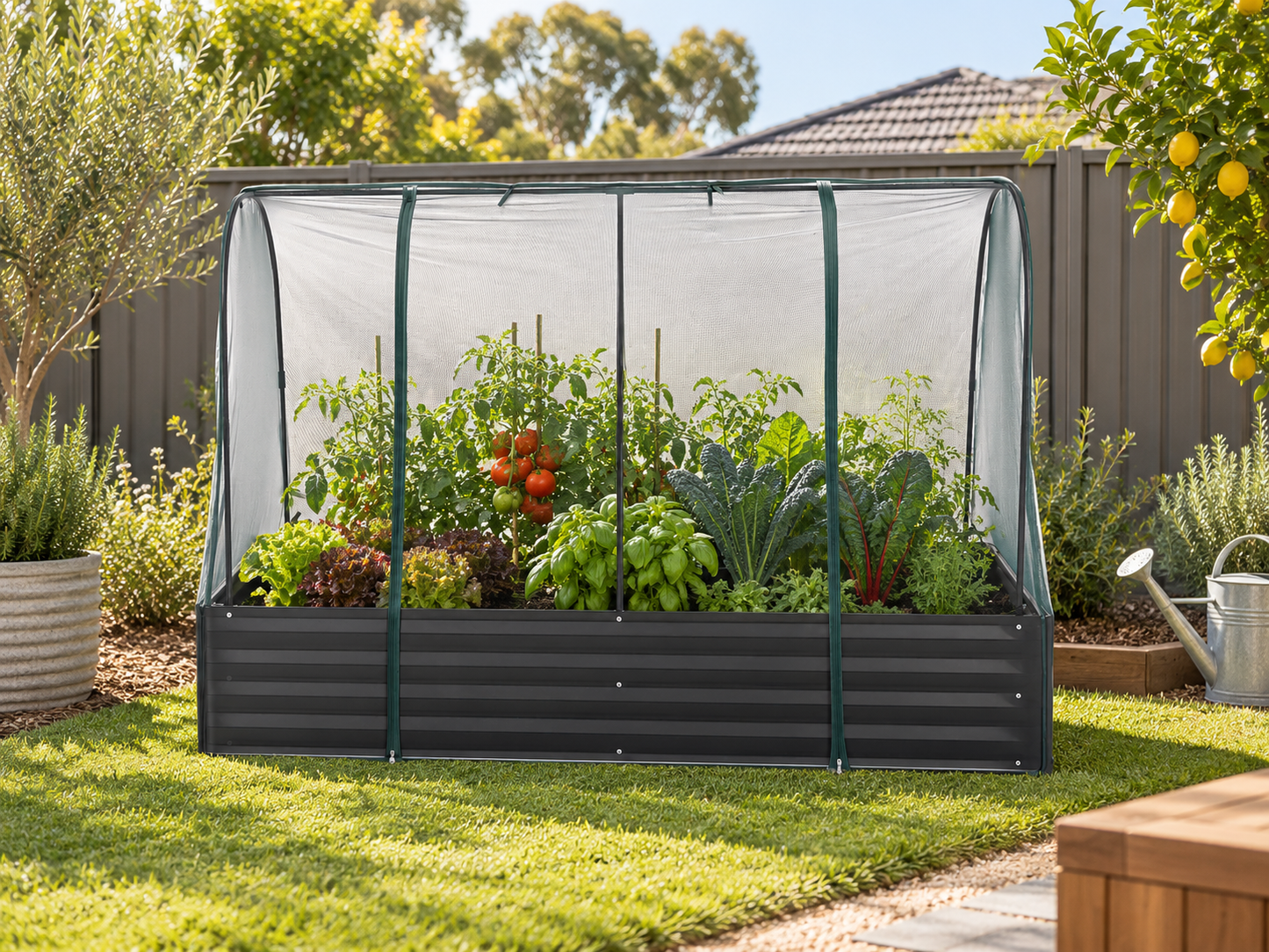
It's disappointing to watch your vegetables grow, only to find something else got there first. The mesh enclosure creates a barrier around your plants to help discourage birds and visiting animals while your garden keeps growing underneath.

Water, Tend & Harvest With Ease
A large zippered access opening means the cover doesn't get in the way. Open it to water, weed, check your plants or pick the day's harvest, then zip it closed again.

Fresh Air In, Some Sun Shading
The fine breathable mesh provides approximately 30% sun shading and lets air circulate around your plants. It's a lighter layer of protection than a solid greenhouse cover.

A Sturdy Steel Garden Bed
The bed is made from galvanised SGCC steel with corrugated side panels for added structure. Smooth rounded corners give it a neat finish that's easy to work around.

Find the Right Spot in Your Garden
The garden bed measures 180 × 90 × 30 cm (L × W × H). With the mesh cover fitted, the overall height is 120 cm. Leave some room around the bed so you can reach the zippered opening.
Tap or click the image to view the measurements at full size.
What's Included
- 1 × raised garden bed
- 1 × mesh netting cover
- 1 × pair of gloves
- Assembly instructions
Product Details
| Garden Bed Material | Galvanised SGCC steel |
|---|---|
| Garden Bed Length | 180cm |
| Garden Bed Width | 90cm |
| Garden Bed Height | 30cm |
| Overall Length With Cover | 180cm |
| Overall Width With Cover | 90cm |
| Overall Height With Cover | 120cm |
| Mesh Sun Shading | Approximately 30% |
| Colour | Black |
| Base Design | Open base |
| Suitable For | Vegetables, herbs, flowers and seasonal plants |
| Assembly Required | Yes |
| Number of Packages | 1 |
| Warranty | 12 months |
Frequently Asked Questions
Will the mesh stop birds and animals?
How do I water the plants with the cover on?
Does the garden bed have a base?
Give Your Veggie Patch Some Backup
Free shipping to most postcodes. Final delivery cost confirmed at checkout.
Add to cart



Supports healthier roots and natural drainage
The open-bottom design allows excess water to drain freely into the ground, helping reduce waterlogging while encouraging roots to grow deeper into the soil below. Water and nutrients move through the garden bed and circulate around the root zone, creating a well-aerated growing environment for vegetables, herbs and flowers. This natural connection with the ground can support stronger root development and healthier plant growth over time. (Note this image may not be an exact representation of your chosen garden bed.)

Helps nutrients move through the soil
As water travels through the garden bed, it carries naturally occurring nutrients through the soil and around the plant roots. The roots absorb what they need to support healthy growth, while excess water continues draining through the open base rather than collecting inside the bed. This ongoing movement of water, nutrients and organic matter helps create an active growing environment for vegetables, herbs and flowers. (Note this image may not be an exact representation of your chosen garden bed.)

Galvanised SGCC Steel
SGCC steel is protected with a layer of zinc that helps shield the underlying steel from moisture and corrosion. The zinc acts as both a protective barrier and a sacrificial layer, helping protect the steel even if the surface experiences minor scratches or wear. This makes galvanised steel a durable, practical choice for outdoor products exposed to changing weather conditions. (Note this image may not be an exact representation of your chosen garden bed.)